Petra Bauer · 13 September 2026
Aligning Mobile Innovations With Evolving Regulatory Frameworks
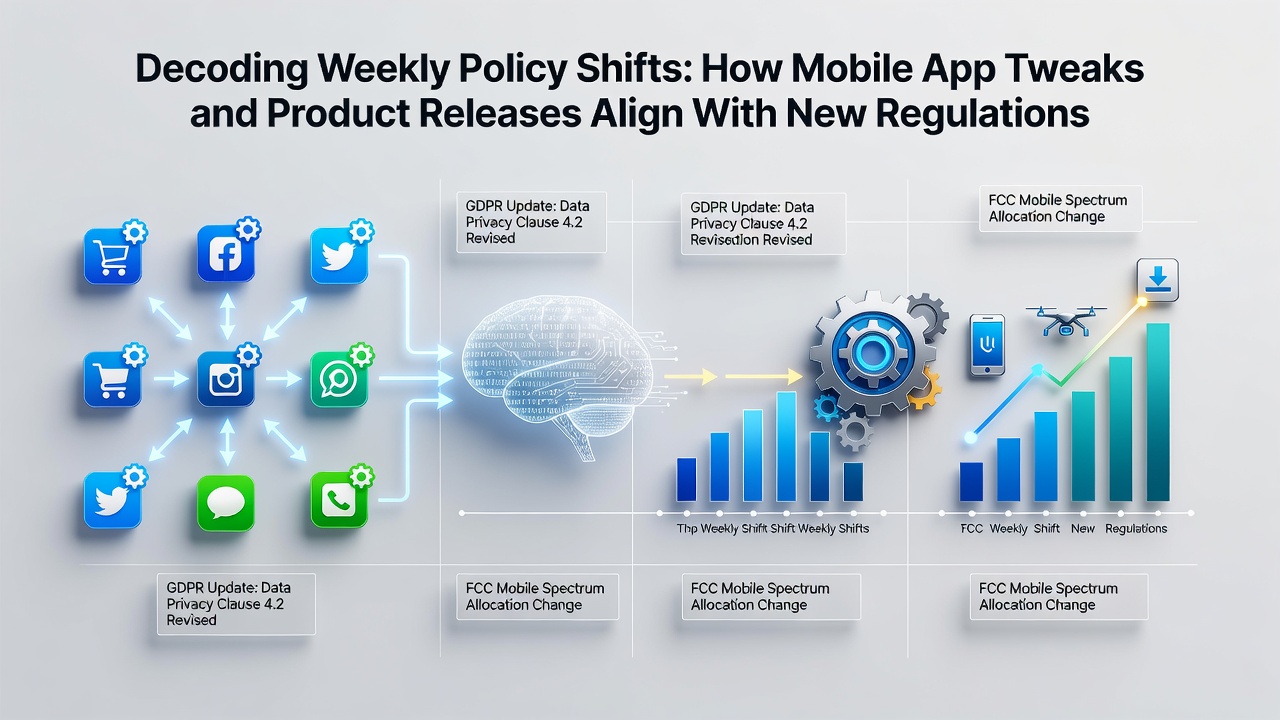
Regulatory landscapes for digital services continue to shift at a steady pace, and mobile application teams track these changes through systematic reviews that connect new rules to specific code adjustments. Data from government agencies shows that jurisdictions across North America, Europe, and the Asia-Pacific region introduced or updated digital service requirements between 2024 and 2025, prompting developers to modify data-handling routines, notification systems, and user-interface elements on weekly release cycles. Observers note that these adjustments often appear in minor version updates rather than full redesigns, allowing companies to maintain user engagement while meeting compliance deadlines.
Weekly Release Patterns and Compliance Triggers
Product teams examine policy announcements from bodies such as the European Commission and the Australian Competition and Consumer Commission, then map each clause to technical requirements. In September 2026, several jurisdictions plan to enforce expanded consent mechanisms for location data and targeted advertising, and teams have already begun testing interface changes that surface granular permission toggles earlier in the user journey. Research indicates that applications handling personal information now incorporate automated compliance checks into continuous-integration pipelines, which flag potential violations before code reaches production servers.
Take one development group that integrated real-time regulatory feeds into their planning tools; the system highlighted wording changes in consent language across multiple regions and generated task lists that developers addressed in successive sprints. Figures from industry reports reveal that the median interval between a new rule publication and the corresponding app update has shortened from 12 weeks in 2023 to roughly 5 weeks in 2025, reflecting both faster tooling and clearer documentation from regulators.
Case Examples From Different Sectors
Health-tracking applications adjusted their data-export features after Canadian privacy authorities clarified retention limits for biometric readings, while navigation services revised background-location prompts to satisfy updated disclosure rules in several U.S. states. Observers note that these modifications frequently involve small user-interface alterations—such as repositioned checkboxes or revised wording in permission dialogs—rather than wholesale architectural overhauls. Studies from academic research centers confirm that users retain higher trust levels when apps communicate policy changes through in-app banners that link directly to updated privacy statements.
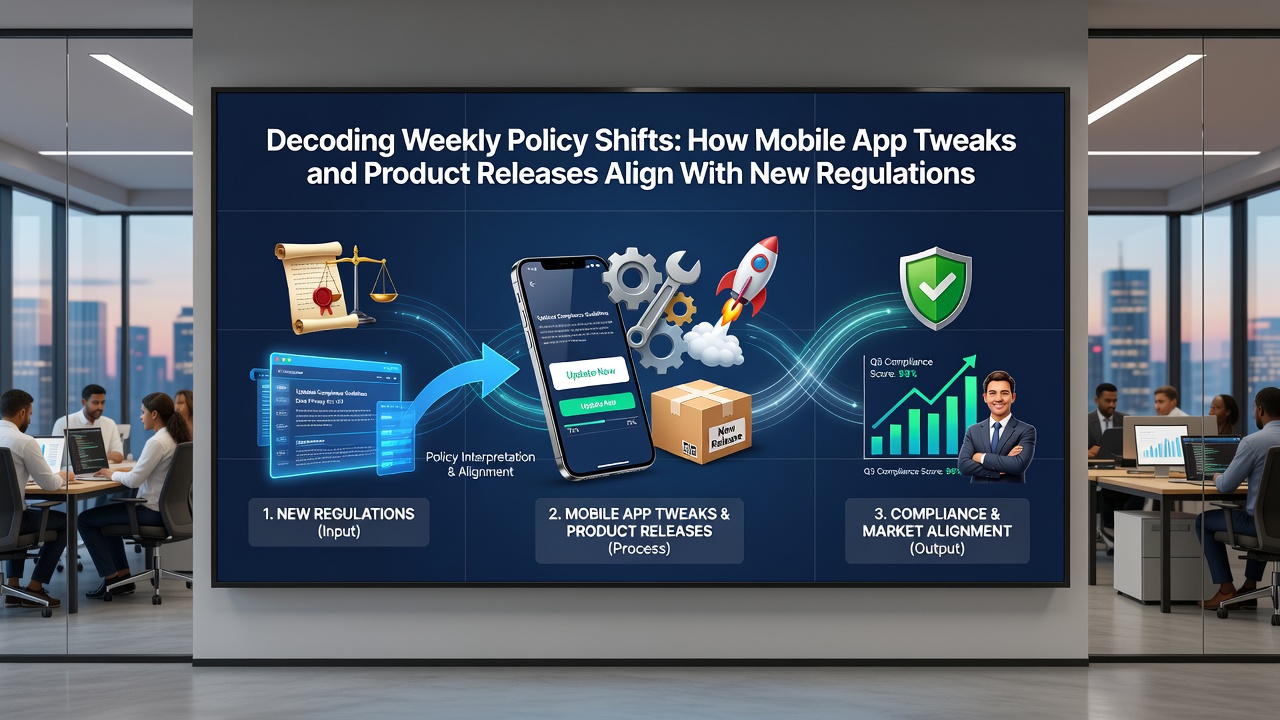
Payment and financial services apps provide another illustration. When new transaction-reporting thresholds took effect in Singapore and parts of the European Union, developers added optional receipt-generation modules that users could enable without altering core checkout flows. The changes rolled out across staged releases, allowing analytics teams to monitor adoption rates and surface any friction points before wider distribution. Data shows that applications following this incremental approach experienced fewer rollback incidents compared with those attempting simultaneous multi-region launches.
Tools and Processes Supporting Alignment
Many organizations now maintain dedicated regulatory-tracking roles that translate legal text into engineering specifications. These specialists collaborate with legal counsel to produce checklists that feed directly into sprint planning software. Automated testing suites simulate user flows under different regulatory scenarios, verifying that consent flows collect required information without introducing unnecessary steps. Researchers have documented that teams using such integrated workflows reduce the average number of post-release compliance tickets by approximately 40 percent.
What's interesting is how documentation practices have evolved alongside code changes. Release notes now routinely include sections that cite specific regulatory articles addressed in the update, and these notes appear in both user-facing changelogs and internal audit trails. This dual-purpose documentation supports both transparency obligations and internal record-keeping requirements that regulators may request during reviews.
Geographic Variation and Timing Considerations
Differences in enforcement dates across regions require careful sequencing. An app available in both the European Union and Australia must often satisfy the stricter of two overlapping standards first, then verify that the same configuration meets the second jurisdiction's expectations. Teams frequently deploy feature flags that activate jurisdiction-specific behaviors based on device locale or IP address, which keeps a single codebase compliant across borders while minimizing user-visible differences. Evidence from trade-association surveys indicates that companies maintaining such modular architectures report shorter time-to-compliance when additional rules emerge.
Looking Ahead
As September 2026 approaches, additional requirements around algorithmic transparency and cross-border data transfers are scheduled for phased implementation. Development groups continue to refine their monitoring systems and testing protocols to accommodate these forthcoming standards. The pattern observed so far shows that consistent attention to regulatory signals, combined with flexible release processes, allows mobile applications to incorporate necessary adjustments without disrupting core functionality or user experience.